
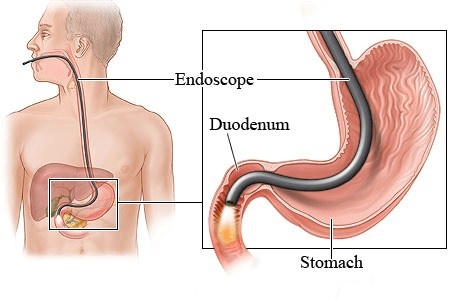
Gastroscopy
Your doctor will take a medical history, including a history of previous bleeding, conduct a physical exam and possibly order tests. Tests might include:
Stool tests. Analyzing your stool can help determine the cause of occult bleeding.
Nasogastric lavage. A tube is passed through your nose into your stomach to remove your stomach contents. This might help determine the source of your bleed.
Upper endoscopy. This procedure uses a tiny camera on the end of a long tube, which is passed through your mouth to enable your doctor to examine your upper gastrointestinal tract.
Colonoscopy. This procedure uses a tiny camera on the end of a long tube, which is passed through your rectum to enable your doctor to examine your large intestine and rectum.
Capsule endoscopy. In this procedure, you swallow a vitamin-size capsule with a tiny camera inside. The capsule travels through your digestive tract taking thousands of pictures that are sent to a recorder you wear on a belt around your waist. This enables your doctor to see inside your small intestine.
A gastroscopy often takes less than 15 minutes, although it may take longer if it’s being used to treat a condition.
It’s usually carried out as an outpatient procedure, which means you won’t have to spend the night in hospital.
Before the procedure, your throat will be numbed with a local anaesthetic spray. You can also choose to have a sedative, if you prefer. This means you will still be awake, but will be drowsy and have reduced awareness about what’s happening.